Here's the counterintuitive truth about soot: the biggest damage often happens during the cleanup attempt, not the fire. Soot particles are microscopic, oily or dry depending on what burned, and electrostatically charged — and the natural instinct to grab a wet sponge and start scrubbing smears them into paint, grinds them into porous surfaces, and turns a removable film into a permanent stain.
NJ Restoration Experts provides professional soot cleanup throughout Northern New Jersey — after structure fires, kitchen fires, furnace and boiler puff backs, fireplace backdrafts, and even heavy candle soot accumulation. We identify the residue type before touching anything, because dry soot, wet smoke residue, protein film, and fuel-oil soot each require different removal methods, and the wrong match sets the damage.
Soot is also corrosive. It's acidic, and it starts etching and discoloring metals, marble, grout, and finishes within days — which is why the appliances, fixtures, and stone that 'just need a wipe-down' end up pitted and yellowed when cleanup waits. Fast, correct soot removal is as much about stopping ongoing damage as restoring appearance.
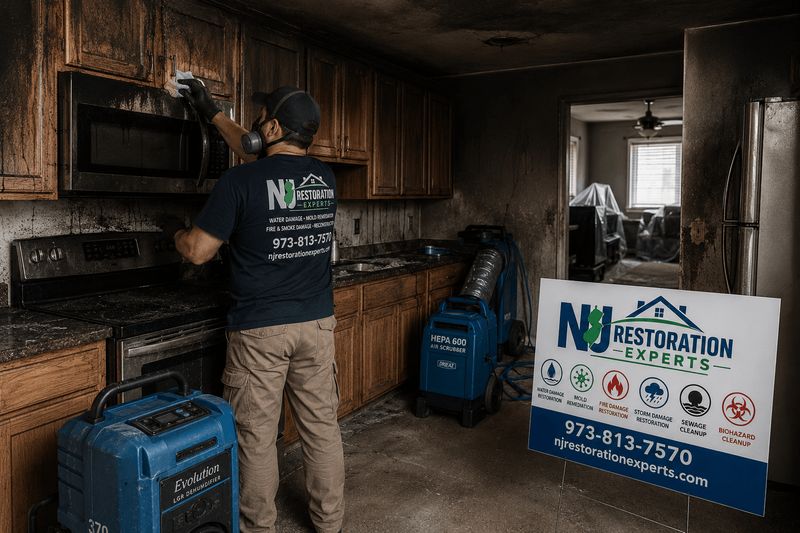
What Our Soot Cleanup Service Includes
- Soot Type Identification & Testing
- Dry Sponge (Chemical Sponge) Cleaning
- Degreasing for Oily & Fuel Soot
- Ceiling, Wall & Surface Restoration
- HEPA Vacuuming & Air Scrubbing
- Metals, Stone & Fixture Treatment
- Electronics & Contents Assessment
- Corrosion-Stopping Priority Cleaning
Where Soot Comes From — and Why the Type Dictates the Cleanup
Fast, hot, oxygen-rich fires produce dry soot: a powdery residue that sits relatively loosely on surfaces and responds well to dry-sponge lifting and HEPA vacuuming — unless someone wets it first, which dissolves and spreads it into the surface. Slow, smoldering, oxygen-starved fires produce wet smoke residue: smeary, sticky, deeply penetrating, and demanding aggressive degreasing rather than dry methods.
Two specialty types show up constantly in New Jersey homes. Protein residue from kitchen fires is nearly invisible but coats everything with a film that discolors finishes and reeks; it requires enzyme and degreasing treatment, not standard cleaning. And fuel-oil soot from furnace puff backs — common across Northern NJ's oil-heated housing stock — is petroleum-based, sticky, and often distributed through every room by the ductwork in a single blast.
Even without a fire event, soot accumulates: heavy candle use deposits carbon films on ceilings and walls (often revealing themselves as ghosting stripes along framing lines), fireplaces backdraft, and unvented heaters leave residue over seasons. The common thread is that identification comes first — a test patch in an inconspicuous spot tells us which chemistry lifts the residue cleanly, and that single step is most of the difference between restoration and repainting.
Soot in Your Home? Don't Touch It Yet
The first rule of soot is to stop damage without spreading residue. These steps help — and the most tempting move is the one to avoid.
- Don't wipe or wet-clean anything — especially walls and ceilings; smearing is usually irreversible
- Keep foot traffic out of sooty rooms; tracked soot grinds into carpet permanently
- Shut down the HVAC system so ducts don't redistribute residue to clean rooms
- Protect high-value surfaces: lay clean towels over marble, brass, and chrome to slow etching
- Photograph everything for insurance before any cleanup begins
- Call 973-813-7570 — early correct cleaning saves surfaces that waiting or wiping would lose
If the soot came from a furnace or boiler malfunction, shut the system down and call your HVAC service as well — running it again repeats the blast. That scenario has its own page: puff back cleanup.
Our Soot Cleanup Process
Identify the Residue
Test patches determine soot type — dry, wet, protein, or fuel-oil — and set the cleaning chemistry for every surface class.
Stabilize & Protect
HVAC off, traffic controlled, vulnerable metals and stone treated first to halt corrosion and etching.
Dry Removal First
Chemical sponges and HEPA vacuuming lift dry particulate from ceilings, walls, and surfaces without driving it deeper.
Wet & Degreasing Phase
Oily and protein residues get the appropriate degreasing agents, applied surface-by-surface with correct dwell and technique.
Air & Odor Treatment
Air scrubbers capture suspended particulate; deodorization follows where odor has bonded — soot and smell are one problem.
Restore or Refer
Surfaces restored where possible; where residue has permanently stained, we prep and seal for refinishing and tell you honestly which is which.
Insurance Claims for Soot Damage
Soot damage from any covered fire event — including furnace puff backs and fireplace malfunctions — is claimable under standard homeowners policies, and coverage properly extends to the full spread of the residue, not just the room where the event occurred. Because soot travels by air and duct, the legitimate scope frequently includes rooms with no visible fire damage at all.
Our documentation makes that spread undeniable: photographed residue evidence room by room, duct contamination where present, affected contents inventories, and the surface-by-surface cleaning scope. We also document the corrosion-priority items — the reason fast professional cleanup was necessary — which supports both the claim and the timeline.
Why NJ Homeowners Call Us First
Type-First Discipline
We never clean before identifying the residue — the step DIY attempts skip, and the reason they end in repainting.
Corrosion Triage
Acidic soot attacks metal, stone, and finishes by the day; we treat the most vulnerable surfaces first.
Whole-Path Cleanup
Soot goes where air goes; we clean the rooms, cavities, and duct paths it actually reached, not just the visible mess.
Smear-Free Methods
Dry-lifting before wet-cleaning, correct agents per surface — soot comes off instead of going in.
Contents Judgment
Electronics, textiles, and finishes each get an honest restore-or-replace call with insurance documentation to match.
One Crew Through Odor
Soot removal and smoke deodorization are one continuous job here — no handoff where the smell falls through the cracks.
Helpful Resources
Our post on soot health risks explains why respiratory protection matters during cleanup. If the source was a heating system blast, go straight to puff back cleanup; for the lingering smell after residue is gone, see smoke odor removal. Full fire recovery lives at fire damage restoration, and salvaging affected belongings at contents cleaning & pack-out.
Soot Cleanup — Frequently Asked Questions
I started wiping the soot and it smeared badly. Can it be fixed?
Often yes, though the smeared areas may need more aggressive treatment or, at worst, sealing and repainting. Stop cleaning, leave the rest untouched, and let us test what will still lift. The un-wiped areas usually restore fully — which is the argument for stopping now.
Is soot dangerous to be around?
Soot particulate is a genuine respiratory irritant — fine particles that reach deep into lungs — and some residues carry combustion byproducts worth taking seriously. Keep kids away from affected areas, avoid dry-sweeping, and let crews with proper filtration handle removal. Sensitivity varies, but nobody benefits from breathing it.
Why is there soot in rooms the fire never touched?
Air movement. Smoke pressurizes and travels the whole envelope, and HVAC systems distribute residue to every register. Closed doors slow it but don't stop it. That's why professional assessment maps the full spread — and why insurance scopes legitimately include 'clean' rooms.
There are black stripes on my ceiling matching the joists. Is that soot?
That's ghosting — fine soot and particulate (often from candles or combustion appliances) depositing preferentially on the cooler surface lines over framing. It confirms an indoor soot source worth identifying, and it cleans and seals the same way other carbon residue does.
Can soot-covered electronics be saved?
Sometimes — it depends on whether the residue reached internal boards and how corrosive it is. Don't power them on: electricity plus conductive soot finishes the job. We assess, and specialized electronics restoration handles the salvageable units through the contents process.
How soon does soot cleanup need to happen?
Days matter. Acidic residue begins discoloring plastics and grout almost immediately, etches metals within days, and permanently yellows finishes within weeks. The corrosion-priority items get treated first precisely because the clock on them is shortest.