Every stubborn odor tells the same story: the smell you notice is molecules off-gassing from a source you haven't found — or found but can't reach. Pet urine that soaked through carpet into the pad and subfloor. Mustiness generated by microbial growth in a damp cavity. Sewage residue in a floor assembly from a backup that was mopped but never sanitized. Smoke bonded into paint and ductwork. Cleaning the surfaces above these sources freshens the room for a day and changes nothing, which is exactly the experience that brings people to this page.
NJ Restoration Experts provides source-removal odor elimination across Northern New Jersey — the full severity range from the pet-odor house that resists every carpet cleaning, through musty homes and post-sewage smells, up to the severe biohazard and decomposition odors that require structural remediation. The discipline is the same at every level: locate the source (UV inspection, moisture meters, and trained noses all get used), remove or treat the contaminated material itself, neutralize what's absorbed into surrounding surfaces, and treat the air last — because air treatment without source removal is the definition of temporary.
One honest routing note: smoke and fire odors have their own dedicated process and their own page — smoke odor removal — because combustion residue behaves differently from everything else. This page covers the rest of the odor world: biological, moisture-driven, sewage, pet, and the severe cases. If you're not sure which you have, call either way; diagnosis is where every odor job starts.
What Our Odor Removal Service Includes
- Odor Source Location & Diagnosis
- Pet Urine Treatment — Pad, Subfloor & Sealing
- Musty Odor Microbial Source Removal
- Sewage & Backup Odor Sanitizing
- Severe & Biohazard Odor Remediation
- Hydroxyl & Ozone Air Treatment
- Duct & HVAC Odor Assessment
- Sealing of Odor-Saturated Surfaces
The Odor Families — and Why Each Needs Its Own Attack
Pet odors are penetration problems. Urine passes through carpet in seconds, saturates the pad, and reaches the subfloor, where it crystallizes into salts that reactivate with every humid day — which is why steam cleaning the carpet above can make the house smell worse, not better. Real remediation follows the depth: UV inspection maps the actual deposits, affected pad is removed, subfloor is treated and sealed with odor-blocking primer where saturation demands it, and enzymatic treatment handles what remains. Cats and multiple-pet histories move the map from spots to zones, and honest assessment tells you which you have.
Musty odors are moisture messengers — the metabolic byproducts of microbial growth somewhere damp: a basement's summer condensation, a crawl space under the floor, a wall cavity with a slow leak, carpet over a slab that never fully dried. The odor is diagnostic, not the disease, and 'musty smell removal' that skips the moisture hunt is air freshener with a service invoice. Our version runs the meters, finds the growth, removes it, and fixes the dampness — after which the smell has nothing left to come from. Sewage odors follow the same logic with higher stakes: post-backup smell means contamination survived the cleanup, usually in floor assemblies or cavities the mop never reached, and the fix is sanitizing remediation, not deodorant.
The severe end — decomposition, long-term neglect, biohazard scenes — is structural odor work: sources removed under proper protocols, affected porous materials cut out rather than treated hopefully, cavities and framing cleaned and sealed, and serious air treatment (hydroxyl for occupied spaces, ozone for vacant ones) finishing what removal started. It's the odor work most companies won't quote and most families shouldn't face alone; we handle it with the discretion it deserves, and it connects to our biohazard cleanup service when scenes require it.
Fighting a Smell That Keeps Winning? Triage First
Before the next bottle of cleaner, establish what you're actually fighting — these observations do half the diagnosis:
- Track the pattern: worse when humid or when heat runs = absorbed/moisture source; localized = deposit; everywhere = ducts or systemic
- Trust the category your nose reports — musty, ammonia/pet, sewage, sweet-foul — each points somewhere specific
- Stop the fragrance layer: plug-ins and sprays mask the diagnostic signal and fool nobody's adjuster or buyer
- For pet odor: a UV flashlight at night maps deposits honestly — often far beyond the known spots
- For musty: check the usual suspects first — basement humidity, crawl space, that room's history with water
- Call 973-813-7570 — describe the pattern and category, and we'll tell you what the diagnosis likely is before we arrive
Selling the house? Odor is the showing-killer that price reductions can't fix, and buyers' noses arrive uncalibrated to what you've stopped noticing. Source-removal deodorization before listing is one of the highest-ROI projects in real estate — and we work those timelines.
Our Odor Removal Process
Diagnose the Source
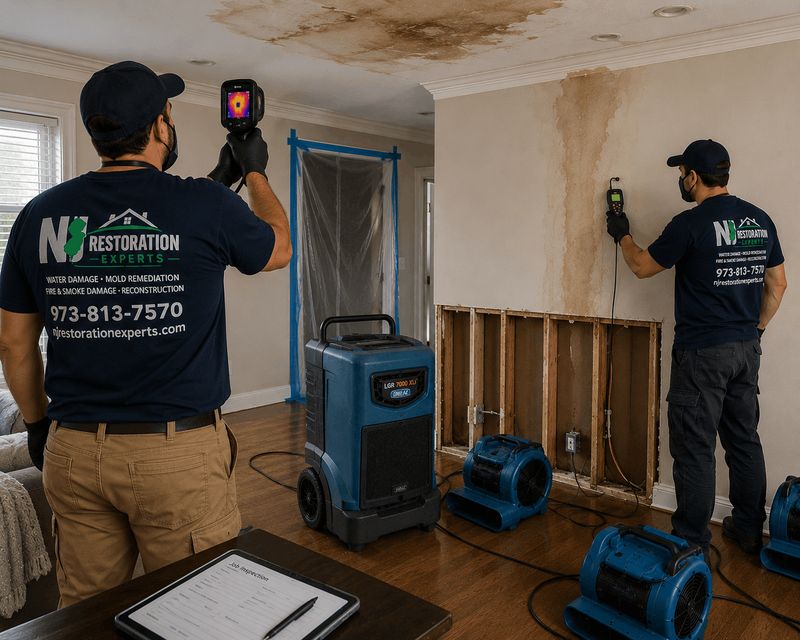
Pattern analysis, UV inspection, moisture metering, and category identification locate what's actually generating the odor — the step every failed DIY attempt skipped.
Scope Honestly
You learn what we found, what removal requires, and what it costs — including the cases where the answer is smaller than feared, or belongs to another trade first.
Remove the Source
Saturated pad, contaminated materials, microbial growth, sewage residue — the generating material comes out or gets remediated in place where treatment genuinely reaches it.
Treat the Absorbed Layer
Surrounding surfaces that drank the odor get enzymatic or antimicrobial treatment matched to the category — neutralization, not perfume.
Seal Where Saturation Won
Subfloors and structural surfaces past full extraction get odor-blocking sealers — the honest, permanent answer for what removal can't fully reverse.
Finish the Air
Hydroxyl or ozone treatment clears the airborne remainder, ducts get addressed where they've absorbed, and the verification standard is simple: noses, including yours.
Insurance Claims for Odor Damage
Odor coverage rides on its cause: deodorization following a covered loss — the sewage backup, the water damage that grew the mustiness, a covered biohazard event — is a legitimate claim component, part of restoring pre-loss condition, and we document and itemize it that way within those claims. The odor remediation isn't a separate favor; it's completion of the covered work, and carriers treat properly documented deodorization accordingly.
Standalone odor projects — the pet-odor house, the smoker's estate purchase, general mustiness without a claimable event — generally sit outside coverage, and we quote them directly with transparent, component-itemized pricing. Where an odor investigation uncovers a claimable cause underneath (the hidden leak feeding the mustiness), that changes the conversation, and we'll tell you the moment the evidence does.
Why NJ Homeowners Call Us First
Source-Removal Doctrine
Every job attacks the generating material — the reason our results survive humid Augusts and fresh noses.
Full Severity Range
From pet-odor houses to the scenes other companies decline — one call covers the entire spectrum, with discretion where it's owed.
Diagnosis Before Invoice
UV, meters, and pattern analysis find the real source first — and if it's smaller than you feared, that's what you'll hear.
Moisture Literacy
Musty odors get the water-hunt they actually require — because we're a restoration company, not a spray service.
Real-Estate Ready
Pre-listing deodorization on listing timelines, with the source-removal permanence buyer noses can't catch out.
Honest About Sealing
Where saturation beats extraction, sealing is the right answer — named as such, done properly, never disguised as removal.
Helpful Resources
Smoke and fire odors have their own dedicated process at smoke odor removal. Musty smells usually trace to moisture — see what causes musty smells, basement mold, and crawl space mold. Post-backup odors connect to sewage cleanup, and the severe end to biohazard cleanup. Air-quality background: mold and indoor air quality.
Odor Removal — Frequently Asked Questions
I've shampooed the carpets three times and the pet smell keeps returning. Why?
Because the odor lives below the carpet — in the pad and often the subfloor — where urine reached in seconds and shampoo never goes. Surface cleaning reactivates it with moisture, which is why the house smells worst the evening after cleaning. The fix follows the depth: UV-mapped deposits, pad removal in affected zones, subfloor treatment and sealing where saturated. That version doesn't come back.
Can you get rid of the smell without tearing up my floors?
When the source sits at treatable depth, yes — enzymatic and antimicrobial treatment genuinely neutralizes what it reaches. When UV and meters show subfloor saturation, honest removal-and-seal beats hopeful spraying, and we'll show you the evidence either way. The diagnostic tells us which house you have; guessing is how the three-shampoo cycle starts.
The house smells musty but we've never had a flood. Where's it coming from?
Floods aren't required — summer condensation in basements, crawl space ground moisture, a slow concealed leak, or carpet over a cool slab all generate microbial mustiness without a single 'event.' The odor is a moisture report from somewhere in the building. We run the meters, find the somewhere, and fix the moisture along with the growth — the sequence that makes it permanent.
We had a sewage backup 'cleaned up' but the smell is still here. What does that mean?
It means contamination survived — almost always in places the visible cleanup didn't reach: under flooring, in the floor assembly, in wall bases the water touched. Sewage odor is a sanitation indicator, not a cosmetic one, and the fix is targeted remediation of those areas, not stronger air freshener. We locate what was missed and finish the job the smell says is unfinished.
Do ozone machines work? I can rent one.
Ozone genuinely neutralizes airborne and surface odor molecules — and does nothing about a source that keeps generating new ones, which is why rental-ozone results fade in days. It's also unsafe to run occupied. In our sequence it's a finishing tool after source removal, where its results actually hold. Renting the last step first is the most common odor mistake after fragrance.
Can you handle severe odor situations — decomposition, hoarding, that level?
Yes — with proper protocols, structural remediation where odors have penetrated materials, and the discretion these situations deserve. It's demanding work that connects to our biohazard services when scenes require them, and families dealing with it get straight answers, respectful crews, and results. You don't have to find a specialist; you've found one.