Finding black mold triggers more homeowner panic than almost any other discovery — and the industry hasn't helped, with decades of 'toxic black mold' marketing designed to convert fear into invoices. Here's the straight version: any visible mold colony, black or otherwise, means your home has had sustained moisture and needs two things — professional removal and correction of the moisture source. That's true whether the species turns out to be Stachybotrys or common Cladosporium, and it's why health agencies advise treating all mold growth the same way: remove it properly, regardless of color.
NJ Restoration Experts provides certified black mold remediation across Northern New Jersey: containment that keeps spores from spreading during the work, HEPA-filtered negative air, removal of colonized porous materials, treatment of what remains, and — the part that decides whether it comes back — identification and correction of the moisture problem underneath.
What black mold does reliably indicate is chronic wetness. The heavily melanized species that appear black favor long-duration moisture: the leak that ran for months, the chronically damp wall, the humidity problem years in the making. So a black colony is a message about your building — water has been here a while — and the remediation that ignores that message is cosmetic. Ours starts with it.
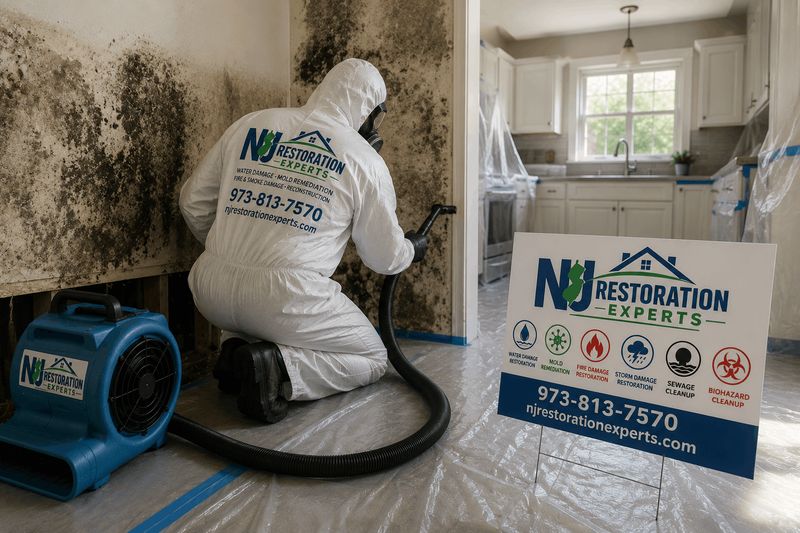
What Our Black Mold Removal Service Includes
- Containment & Negative Air Setup
- HEPA Air Filtration During Work
- Colonized Material Removal & Disposal
- Structural Surface Treatment
- Moisture Source Identification
- HVAC Spread Assessment
- Post-Remediation Verification Support
- Prevention & Humidity Guidance
What Black Mold Actually Is — and Isn't
'Black mold' is a color description, not a diagnosis. Dozens of common indoor species appear black or near-black, including everyday Cladosporium and Aspergillus varieties, alongside the infamous Stachybotrys chartarum. Stachybotrys is real and worth removing — it's a slime-textured, dark greenish-black species that favors long-saturated cellulose like wet drywall paper — but visual identification of species is guesswork, and remediation practice doesn't change based on the answer. Established colonies get contained and removed either way.
On health: mold exposure genuinely affects people — allergic reactions, respiratory irritation, and asthma aggravation are well documented, and some individuals are considerably more sensitive than others. What the evidence doesn't support is the catastrophic 'toxic mold' narrative sold by the scarier corners of this industry. The honest position: don't panic, don't ignore it either, keep sensitive individuals away from the affected area, and have the colony removed properly. Anyone diagnosing your family's symptoms from a wall stain is selling something.
The building science is the dependable part. Black-appearing colonies typically mark long-duration moisture: slow plumbing leaks inside walls, chronic condensation on cold surfaces, basement and crawl space humidity, or the aftermath of a water loss that never fully dried. Find the colony's food and water and you've found the real problem — which is why our assessment maps moisture before anyone opens a containment kit, and why the fix always has two parts: remove the mold, end the moisture.
Found Black Mold? Do This — and Skip the Bleach
What you do before remediation affects both the spread and the fix. The most popular DIY move is also the least effective.
- Don't scrub or spray it — disturbing an established colony launches spores into the air
- Skip the bleach: on porous materials it whitens the surface while roots survive, and adds moisture to the wall
- Close off the area casually — door shut, towel at the gap — without taping yourself into a project
- Turn off HVAC serving the affected room so the system doesn't distribute spores
- Photograph the growth and any visible moisture source for documentation
- Call 973-813-7570 — assessment first, then a scoped plan, not a panic price
Small surface mold on non-porous bathroom surfaces is a normal-homeowner cleaning task — the professional threshold is established growth on porous materials, growth that returns after cleaning, or any colony bigger than a few square feet. We'll tell you honestly which side of the line yours is on.
Our Black Mold Removal Process
Assess & Map Moisture
We inspect the growth and — more importantly — meter and trace the moisture feeding it. The moisture map defines the real scope.
Contain the Work Area
Plastic containment and negative air with HEPA filtration isolate the colony so remediation doesn't seed the rest of the house.
Remove Colonized Materials
Mold-rotted drywall, insulation, and porous materials come out bagged and sealed — established growth in porous material is removed, not treated in place.
Treat & Clean Structure
Framing and remaining surfaces are cleaned, treated, and HEPA-vacuumed; the air within containment is scrubbed throughout.
Fix the Moisture
The leak gets repaired, the humidity gets managed, the condensation gets addressed — whichever fed this colony, it ends here.
Verify & Rebuild
Post-remediation verification confirms clearance before containment drops, and rebuild proceeds over a clean, dry structure.
Insurance Claims for Mold Remediation
Mold coverage is narrower than water coverage, and knowing the shape of it saves grief. The general rule: mold resulting from a covered sudden water loss — the burst pipe you claimed in January — is typically covered, though often subject to a specific mold limit ($5,000–$10,000 caps are common). Mold from long-term moisture, chronic humidity, or deferred maintenance is generally excluded. The cause of the moisture decides the coverage.
That makes moisture documentation the heart of the claim, and it's where our process helps: we trace and record the source, connect it to the originating loss where one exists, and document the remediation scope within the policy's framework. Where coverage doesn't apply, we say so plainly and scope the work transparently — a straight answer beats a contested claim.
Why NJ Homeowners Call Us First
No Fear-Based Selling
We'll never diagnose your health from a stain or inflate a scope with the word 'toxic' — assessment, evidence, plan.
Containment-First Protocol
Negative air and sealed containment mean remediation removes the problem instead of redistributing it.
Moisture Fixed, Not Just Mold
Every job ends with the water source addressed — the difference between remediation and a repeat appointment.
Honest Scope Lines
Surface mildew you can clean yourself gets called exactly that; established growth gets the full protocol. We tell you which you have.
Verification Welcomed
We support independent post-remediation testing — clearance by a third party is confidence, not a threat.
Rebuild Under One Roof
Removal through reconstruction with one accountable crew, so the wall goes back better than it came down.
Helpful Resources
Start with our post is black mold dangerous? for the evidence-based version, and remediation vs. removal for what the terms actually mean. Location-specific mold has dedicated pages: basement, attic, bathroom, and crawl space. Verification testing is covered at mold inspection & testing and post-remediation verification.
Black Mold Removal — Frequently Asked Questions
Is black mold really dangerous to my family?
Mold exposure can genuinely cause allergic and respiratory symptoms, and some people — especially those with asthma, allergies, or immune conditions — are more affected than others. The catastrophic claims attached to 'toxic black mold' outrun the evidence. The sensible course: keep sensitive individuals out of the affected area, remove the colony properly, and fix the moisture. That's what health agencies recommend, and it's what we do.
Do I need testing to know if it's the toxic kind?
Usually not — established growth gets removed under the same protocol regardless of species, so pre-testing often adds cost without changing the plan. Testing earns its keep for air-quality questions, hidden-mold investigations, and post-remediation clearance. We'll tell you when it's worth it and when it's theater.
Why not just bleach it?
On porous materials, bleach whitens the visible growth while hyphae survive within the material — and the water in the solution feeds the survivors. The colony reappears within weeks, now trained to your cleaning schedule. Established growth in drywall or wood is removed, not repainted; surfaces that can be treated get proper antimicrobials, not chlorine cosmetics.
The mold came back after the last company treated it. Why?
Almost always because the moisture survived the remediation. Mold is the symptom; water is the condition. If the leak, condensation, or humidity that fed the first colony is still running, no removal holds. Our jobs end with the moisture source identified and corrected — that's the part that makes remediation permanent.
Will my insurance cover black mold removal?
If the mold resulted from a covered sudden water loss, typically yes — subject to your policy's mold limit. If it grew from chronic moisture or maintenance issues, typically no. We document the moisture source honestly, which supports the claim when coverage exists and gives you a straight answer when it doesn't.
Is it safe to stay in the house during remediation?
Generally yes — containment and negative air exist precisely so the work area is isolated from the living space. We'll advise on the specifics: sensitive individuals may prefer distance from the immediate area, and large or HVAC-involved jobs occasionally warrant more caution. You'll get the real answer for your situation, not a blanket policy.