Washing machine floods have a brutal signature: they happen mid-cycle, under pressure, and usually when nobody's watching. A rubber supply hose that's been quietly aging for eight years bursts during the rinse cycle, and a 3/4-inch line at household pressure pours water out at several gallons a minute — into the laundry room, through the floor, and into whatever sits below.
NJ Restoration Experts handles washing machine and laundry-area water damage 24/7 across Northern New Jersey. We extract the water, dry the laundry room and every space the water traveled to — frequently a ceiling and room on the floor below — and restore the damage with full documentation for your insurance claim.
Second-floor laundry rooms, increasingly common in newer NJ construction, raise the stakes dramatically. Water finds the floor penetrations around drains and supply lines and heads straight down. By the time the leak is discovered, the real damage is often in the kitchen or living room ceiling underneath — which is why we meter below the laundry room on every one of these losses.
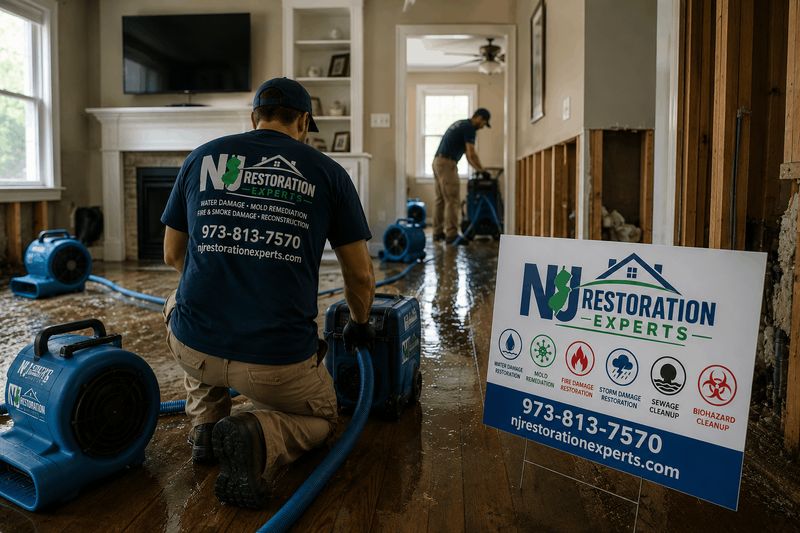
What Our Washing Machine Leak Cleanup Service Includes
- Emergency Extraction & Cleanup
- Laundry Room Floor & Wall Drying
- Below-Floor Ceiling & Cavity Drying
- Drain Pan & Standpipe Overflow Cleanup
- Hardwood & Subfloor Drying
- Sanitizing for Drain-Water Overflows
- Hose & Connection Failure Documentation
- Structural Drying Verification
Why Washing Machines Flood NJ Homes
Supply hoses are the number one offender. The factory rubber hoses connecting the machine to the wall valves run under constant pressure whether the machine is on or not, and they age invisibly — bulging, cracking at the crimp, and eventually bursting. Most manufacturers and insurers recommend replacement every five years, and braided stainless lines for good reason; a burst hose with nobody home is one of the most expensive routine losses in any home.
Drain-side failures come next: a drain hose that vibrates out of the standpipe mid-cycle, a clogged standpipe that backs up and overflows, or a house drain problem that sends the machine's discharge back onto the floor. These floods involve used wash water — detergent, soil, and whatever the load carried — so cleanup includes sanitizing, not just drying.
The machine itself fails too: door boot seals on front-loaders tear, internal pumps crack, tub seals let go, and overloaded machines walk and pull their connections loose. Whatever the cause, the water path is what determines the damage — across the laundry floor, under adjacent walls, and down through floor penetrations to the level below.
Washer Flooding? Stop It in Seconds
Laundry connections are one of the few places in the house with dedicated shutoffs at arm's reach. Use them first.
- Turn both wall valves behind the machine clockwise to close — hot and cold
- Cancel the cycle and unplug the machine only if the outlet and your hands are dry
- If valves are stuck or unreachable behind the unit, shut the house main instead
- Towel-dam doorways to slow water spreading to adjacent rooms
- Check the ceiling below (second-floor laundry) — note any staining or dripping immediately
- Photograph the failure and the water's reach, then call 973-813-7570
Leave the machine pulled forward if you moved it — our crew needs access to the connections, and the flooring behind it is usually the wettest in the room.
Our Washing Machine Leak Cleanup Process
Rapid Dispatch
We confirm the water is off and get a crew moving — with cavity-drying equipment if the laundry is above living space.
Trace the Water Path
Meters and thermal imaging follow the water across the room, under walls, and down through the floor system to find its full reach.
Extract
Standing water comes out of flooring, drain pans, and any pooled cavities below — fast, before wicking spreads it further.
Dry Room & Below
Air movers and dehumidifiers dry the laundry room, subfloor, and the ceiling cavity underneath to verified targets.
Sanitize Where Needed
Drain-water and gray-water overflows get antimicrobial cleanup; supply-line floods get cleaned and deodorized.
Document & Restore
Failure photos, moisture logs, and repair scope go to your adjuster; our team restores the finishes when drying is verified.
Insurance Claims for Washing Machine Leaks
Burst supply hoses and sudden machine failures are classic covered losses under standard homeowners policies — the resulting damage to floors, walls, ceilings, and contents is typically claimable. As with all appliance losses, carriers distinguish sudden failure from long-term seepage around a machine that's been weeping for months, so evidence of what failed and when carries real weight.
We photograph the failed hose, connection, or component before anything is replaced, map the full water path with readings, and log the drying process end to end. If the flood reached the floor below, our documentation ties the ceiling damage to the laundry failure explicitly — a connection adjusters need demonstrated, not assumed.
Why NJ Homeowners Call Us First
We Look Below the Leak
Second-floor laundry floods live in the ceiling underneath; we meter and dry the cavity below on every loss, not just visible surfaces.
Pressure-Loss Experience
Burst hoses at line pressure create wide, fast spreads — our extraction and drying setups are sized for exactly that.
Gray-Water Handled Correctly
Drain overflows carry contamination; we sanitize accordingly instead of treating everything as clean water.
Evidence Before Disposal
The failed hose gets photographed before the plumber replaces it — small detail, big difference in the claim.
Hardwood & Laminate Salvage
Laundry areas open to kitchens and halls with finished flooring; we dry in place wherever readings allow it.
Prevention Guidance
We'll show you the shutoffs, flag hose age, and recommend the braided-line upgrade that prevents round two.
Helpful Resources
Washing machines aren't the only appliance risk — our appliance leak cleanup page covers dishwashers, refrigerators, and more, and the post on dishwasher leaks explains the kitchen version of this loss. If water reached wood floors, read our hardwood floor water damage guide. Ceiling below the laundry stained? See ceiling water damage repair.
Washing Machine Leak Cleanup — Frequently Asked Questions
The washer flooded while I was out — how bad is it likely to be?
It depends on how long the water ran. A burst supply hose can release several gallons a minute, so an afternoon away can mean hundreds of gallons through the house. Shut the valves, check the rooms and ceiling below the laundry, and call us — we'll assess the true spread with meters rather than guessing from the visible water.
Should the flooring under the washer come up?
Only if readings say so. Vinyl and tile over concrete often dry in place; laminate and floating floors trap water in their underlayment and frequently need removal; hardwood is a salvage judgment we make with meters. We remove the minimum the moisture data requires.
Is washing machine water contaminated?
Supply-line water is clean. Drain and overflow water is gray water — used wash water with detergent and soil — and gets sanitizing treatment as part of cleanup. If a shared drain backed up sewage into the overflow, that escalates to full contaminated-water protocols.
Does insurance cover a burst washer hose?
Generally yes — it's one of the textbook sudden-and-accidental losses. The machine itself typically isn't covered, but the water damage is. We preserve and photograph the failed hose so the cause is never in dispute.
My laundry room is on the second floor — what should I check?
The ceiling directly below, immediately and again over the next day. Staining, bubbling paint, or dripping from fixtures means the floor cavity took on water. Even with no visible signs, it's worth our meter check — floor systems can hold water without showing it for days.
How do I keep this from happening again?
Replace rubber supply hoses with braided stainless every five years, don't run the machine when nobody's home, keep the drain standpipe clear, and know where the wall valves are. We're glad to point all of it out while we're on site.