
Sump pumps fail at the worst possible moment — by definition. The same storm that's pushing groundwater toward your foundation is the one knocking out power, overwhelming the pump's capacity, or finally finishing off a motor that's been running on borrowed time. When it happens, the pit overflows and the basement takes on water steadily until someone intervenes.
NJ Restoration Experts provides 24/7 sump pump failure cleanup across Northern New Jersey. We pump out standing water, extract what's soaked into flooring and walls, dry the structure with commercial dehumidification, and sanitize — because groundwater that's been through your sump pit is not clean water.
During major storms, we triage calls so active flooding gets crews first. Even if every company in the area is slammed, calling us early gets you in the queue with real information about arrival time — and practical steps you can take in the meantime.
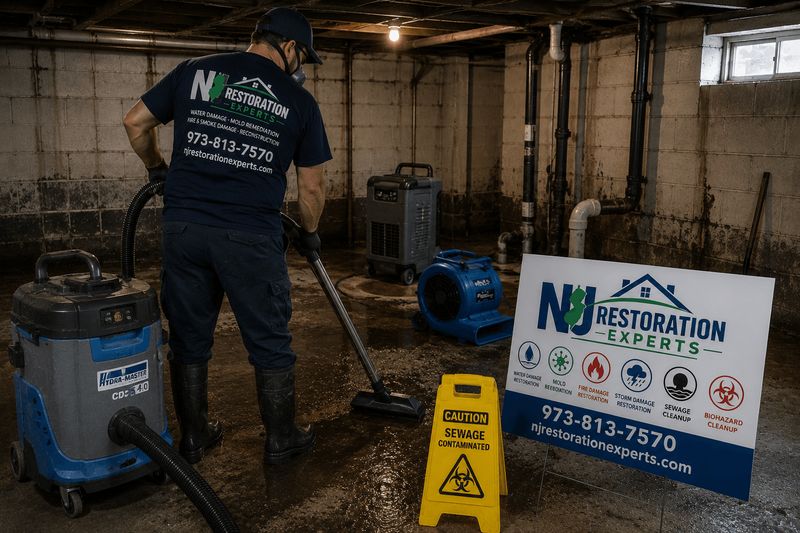
What Our Sump Pump Failure Cleanup Service Includes
- Emergency Pumping & Water Removal
- Water Extraction from Floors & Carpet
- Structural Drying & Dehumidification
- Sanitizing & Antimicrobial Treatment
- Damaged Contents Inventory & Pack-Out
- Sump Pit & Discharge Line Assessment
- Moisture Verification Before Rebuild
- Insurance Claim Documentation
Why Sump Pumps Fail When You Need Them Most
Power loss is the number one killer. The thunderstorm dropping two inches an hour on your neighborhood is the same one taking down power lines — and a pump without power is just a decoration in a hole. Battery backups help, but batteries age, and many fail their first real test after a few years of neglect.
Mechanical causes come next: a stuck or tangled float switch, a motor at the end of its 7–10 year lifespan, an undersized pump facing a storm beyond its capacity, or a discharge line that's frozen, clogged, or disconnected outside. Any one of them produces the same result — water rising past the pit rim and spreading across the slab.
There's also simple hydrology: some Northern NJ storms drop more water than any residential pump can move. High water tables in low-lying towns, clay soils that push runoff at foundations, and downspouts discharging near the foundation all load the pit faster than it can empty. Cleanup is our job; we'll also flag what we see at the pit and discharge line so your plumber can address the cause.
Sump Pump Down? Take These Steps
Water from a failed sump pump rises steadily rather than all at once — which means the next hour matters. If it's safe, act on these before the water spreads further.
- Confirm the outlet and breaker if there's power — a tripped GFCI is the cheapest fix in restoration
- Check the float switch — a shifted pump can jam the float against the pit wall
- Never reach into a pit or standing water if there's any chance the area is electrified
- Move stored items, electronics, and furniture legs up off the floor now, before water reaches them
- Photograph the rising water, the pit, and anything already wet
- Call 973-813-7570 — during storms, an early call means an earlier crew
If the water is already several inches deep, skip the troubleshooting and stay out — let our crews handle the pit once the basement is safe and pumped down.
Our Sump Pump Failure Cleanup Process
Storm-Priority Dispatch
Active flooding jumps the queue. We confirm depth, power status, and safety, then dispatch the nearest available crew.
Pump-Down & Extraction
Submersible pumps drop the water level fast; extractors then pull water out of carpet, flooring, and low spots across the slab.
Assess the Pit & Source
We check the pump, float, check valve, and discharge line, and document the failure point for your insurance claim.
Removal Where Required
Saturated padding, damaged flooring, and wicked drywall are removed only where moisture readings say they can't be saved.
Dry & Sanitize
Air movers and commercial dehumidifiers dry the structure to verified targets while antimicrobial treatment addresses contamination.
Document & Close Out
Photos, moisture logs, and a damaged-contents inventory are packaged for your adjuster, and we confirm the space is ready for repairs.
Insurance Claims for Sump Pump Failure
Here's the critical detail most homeowners learn the hard way: standard homeowners policies typically exclude water that backs up or overflows from a sump pit. Coverage comes from a specific endorsement — usually called water backup and sump discharge or overflow coverage — often sold with its own limit, commonly $5,000–$25,000. If you carry that rider, this loss is generally claimable; if you don't, it's worth adding the day after cleanup.
Either way, we document the loss completely: the failed equipment, the water level, moisture readings through drying, and an inventory of damaged contents. If you have the endorsement, that package supports your claim to its limit. If you don't, the same documentation supports tax casualty records and gives you a clear picture for the conversation with your agent.
Why NJ Homeowners Call Us First
Built for Storm Surges
When a storm floods fifty basements at once, our multiple Northern NJ crews and triage system get water moving out fast.
Groundwater Treated as Contaminated
Water that's been through soil and a sump pit gets sanitizing, not just drying — the health-correct approach.
Failure-Point Documentation
We photograph and describe the failed pump or line clearly, which is exactly what a water-backup claim needs.
Meter-Verified Dry-Down
Slabs and finished basement walls are confirmed dry with readings before any rebuild begins.
Straight Answers on Salvage
We tell you honestly what can be dried and what should go — no padding the scope in either direction.
Prevention Flagging
We point out what we see at the pit, float, and discharge line so your plumber can stop round two.
Helpful Resources
Want to keep this from happening again? Our post on preventing sump pump failure covers backups, maintenance, and warning signs. For the wider basement picture, see our basement flood cleanup service and the flooded basement cleanup guide. Wondering about coverage? Start with our NJ insurance coverage explainer. Also see our battery backup buyer's guide: read it here.
Sump Pump Failure Cleanup — Frequently Asked Questions
My sump pump failed during a storm — how fast can you come?
During storm events we triage by severity, and active flooding is top priority. Call as early as you can: we'll give you an honest arrival window and steps to limit damage in the meantime, and crews keep running through the night until the queue is clear.
Is sump pump failure covered by homeowners insurance?
Not by a standard policy alone — it typically requires a water backup/sump overflow endorsement. Many NJ homeowners carry it without realizing; check your declarations page or call your agent. We document the failure thoroughly either way so your claim options are preserved.
Is sump pit water dangerous?
Treat it as contaminated. It's groundwater that has moved through soil and sat in a pit, often mixing with whatever was on the basement floor. That's why our cleanup includes sanitizing and antimicrobial treatment rather than drying alone.
Should I buy a new pump before you arrive?
Focus on safety and moving belongings first. Our crews bring pumping equipment, so the cleanup doesn't wait on a replacement pump. For the permanent fix, we'll document what failed so your plumber can size and install the right unit — ideally with a battery backup.
How long will drying take after a sump failure?
Extraction happens on arrival; structural drying typically runs 2–4 days depending on depth, dwell time, and finishes. Concrete slabs release moisture slowly, so we verify with meters daily rather than calling it done by appearance.
Can you prevent mold after the basement dries?
Yes — fast extraction, correct removal of unsalvageable materials, verified structural drying, and antimicrobial application are precisely the mold-prevention playbook. If water sat for more than a day or two before cleanup, consider adding a mold inspection for certainty.