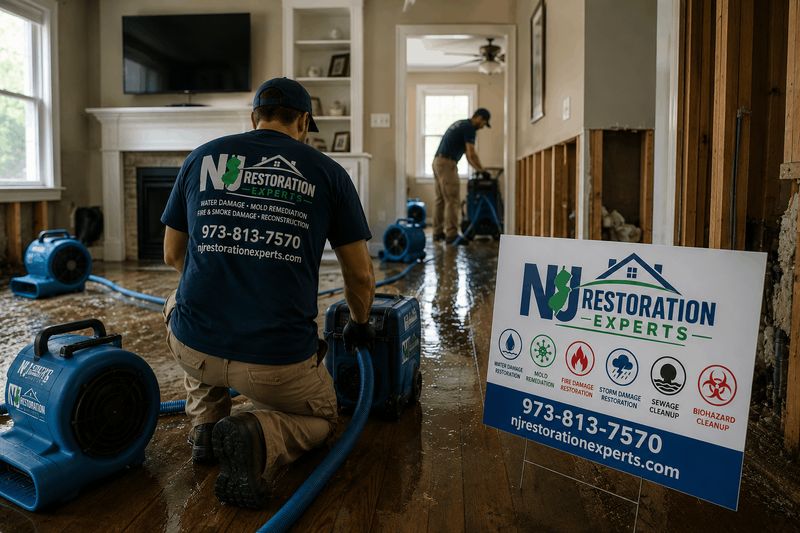
A flooded basement is the single most common emergency call we get in New Jersey — and one of the most urgent. Whether it's three inches from a heavy summer storm or three feet from a failed sump pump, water in a basement starts damaging framing, drywall, utilities, and stored belongings the moment it arrives. Within 24 to 48 hours, mold growth becomes a real risk.
NJ Restoration Experts provides true 24/7 basement flood cleanup throughout Northern New Jersey. We arrive with truck-mounted extractors, submersible pumps, air movers, and commercial dehumidifiers — everything needed to remove the water, dry the space, and sanitize contaminated surfaces in one coordinated visit.
We don't just pump and leave. Our technicians trace where the water came from, map moisture inside walls and slabs with professional meters, and document every step for your insurance claim. The goal is a basement that is verifiably dry — not one that smells musty again in October.
What Our Basement Flood Cleanup Service Includes
- Emergency Pumping & Standing Water Removal
- Truck-Mounted Water Extraction
- Structural Drying & Commercial Dehumidification
- Carpet, Padding & Flooring Removal or Salvage
- Sanitizing & Antimicrobial Treatment
- Contents Pack-Out & Damaged Item Inventory
- Moisture Mapping & Dry-Out Verification
- Sump Pump & Drainage Failure Assessment
Why New Jersey Basements Flood
Northern New Jersey basements flood for a handful of predictable reasons. Sudden downpours overwhelm gutters, grading, and municipal storm drains — especially in older towns where clay soil sheds water toward foundations instead of absorbing it. Sump pumps fail exactly when they're needed most, usually during a power outage in the middle of a storm. Aging foundation walls seep through cracks and cove joints. And burst pipes or water heater failures can dump hundreds of gallons into a finished basement in hours.
The source matters, because it determines both the cleanup approach and the insurance picture. Groundwater seepage and clean supply-line water are handled differently than storm runoff or a sewer backup, which carry contamination and require disinfection, not just drying. Our crews identify the category of water on arrival and set the cleanup plan accordingly — including full sanitizing and antimicrobial treatment when the water isn't clean.
Finished basements raise the stakes further. Carpet padding, laminate flooring, and the bottom of drywall wick water upward fast. Deciding what can be dried in place and what has to be removed is a judgment call that determines whether your basement is genuinely restored or quietly left damp behind the walls — we make that call with moisture meters, not guesswork.
What to Do in the First 30 Minutes of a Basement Flood
Before our crew arrives, a few careful steps can limit the damage — but only if it's safe. Never enter standing water if outlets, cords, or the electrical panel could be submerged or wet.
- Kill power to the basement at the breaker — only if the panel is dry and safely reachable
- Stop the source if you can: water main for pipe breaks, supply valve for appliance leaks
- Move irreplaceable items and electronics up and out of the water's reach
- Don't run a household shop-vac in deep water — it won't keep up and can be dangerous
- Photograph the water level, damaged items, and the source before anything is moved
- Call us at 973-813-7570 — we'll dispatch and tell you exactly what to do until we arrive
If the flooding came from a sewer backup or floor drain, stay out of the water entirely — it's contaminated, and cleanup requires protective equipment and proper disinfection.
Our Basement Flood Cleanup Process
Emergency Dispatch
Call us any hour. We collect key details — water depth, source, and whether power is safely off — and dispatch the nearest available Northern NJ crew.
Assessment & Safety Check
On arrival we confirm electrical safety, identify the water source and category, and map how far moisture has traveled into walls, framing, and the slab.
Pumping & Extraction
Submersible pumps handle deep water; truck-mounted extractors remove the rest from floors, carpet, and low spots until no standing water remains.
Removal & Salvage Decisions
Saturated padding, laminate, and wicked drywall are removed where required; salvageable materials and contents are set up for drying and cleaning.
Drying & Sanitizing
Air movers and commercial dehumidifiers run until moisture readings hit dry-standard targets. Contaminated surfaces get antimicrobial treatment.
Verification & Documentation
We re-check every mapped area with meters, confirm the structure is dry, and hand you complete photo and moisture documentation for your insurance claim.
Insurance Claims for Basement Flooding
Basement claims are where coverage details matter most. Water from a burst pipe or failed water heater is typically covered by standard homeowners policies, while sump pump failure and sewer backup usually require a specific rider — and surface flooding from outside generally falls under separate flood insurance. We can't change what your policy says, but we document the source and damage precisely so your claim is presented accurately and completely.
Our crews photograph everything, log moisture readings throughout drying, and inventory damaged contents room by room. That documentation package goes directly to your adjuster, and we're happy to walk the loss with them on site. Most homeowners find the claim goes smoother when the restoration contractor and the adjuster are working from the same detailed records.
Why NJ Homeowners Call Us First
Real Emergency Response
Crews positioned across Northern NJ mean we're pumping water out in hours, not giving you a next-day appointment window.
Category-Correct Cleanup
Storm water, groundwater, and sewage each get the protocol they require — including full disinfection when contamination is involved.
Meter-Verified Drying
We prove the basement is dry with moisture readings, not by look and feel, so mold doesn't get a foothold behind finished walls.
Insurance-Ready Records
Photos, readings, and inventories organized the way adjusters need them — your claim is supported from day one.
Salvage-First Approach
We dry and restore what can be saved and only remove what genuinely can't — keeping cost and disruption down.
One Accountable Crew
Extraction, drying, sanitizing, and repairs handled by one team, so nothing falls between contractors.
Helpful Resources
Dealing with a flooded basement right now? Our step-by-step flooded basement cleanup guide covers what to expect, and our posts on preventing sump pump failure and NJ water damage insurance coverage answer the most common questions we hear. If the failure point was your pump, see our dedicated sump pump failure cleanup service, or visit the main flood cleanup page for the full picture.
Basement Flood Cleanup — Frequently Asked Questions
How fast can you get to a flooded basement?
We run 24/7 emergency crews across Northern New Jersey and prioritize active flooding. In most of our service area we're on site within hours of your call — and we'll give you a realistic arrival window the moment we dispatch.
How long does it take to dry a flooded basement?
Extraction usually happens the same day. Structural drying typically takes 2–4 days depending on water depth, how long it sat, and what materials were soaked. We verify with moisture meters daily rather than guessing.
Can carpet in a flooded basement be saved?
Sometimes. Clean-water floods caught quickly often allow carpet to be dried in place, though padding usually needs replacement. Any carpet touched by contaminated water — sewage or exterior storm water — should be removed for health reasons.
Is basement flooding covered by homeowners insurance?
It depends entirely on the source. Burst pipes and appliance failures are usually covered; sump pump failure and sewer backup typically need an added endorsement; rising surface water requires flood insurance. We document the source clearly so your claim is decided on accurate facts.
Do I need to worry about mold after a basement flood?
Yes — mold can begin developing within 24–48 hours in a damp basement. Fast extraction, correct removal of saturated materials, and verified structural drying are exactly how we prevent it. If the water sat for days before cleanup, ask us about adding a mold inspection.
Do you handle finished basements and rec rooms?
Absolutely. Finished spaces are where salvage decisions matter most — we dry drywall, trim, and flooring in place where readings allow, and make clean, targeted removals where they don't, documenting everything for the rebuild.