Every serious loss has two halves. The first is mitigation — the emergency work of extraction, demolition, drying, and cleaning that stops the damage from spreading. The second is reconstruction: rebuilding the walls that were opened, the floors that came up, the ceilings that came down, and the rooms that a fire or flood unmade. It's the half that turns a stabilized structure back into your home — and it's where too many restoration stories stall, stuck between a mitigation company that's finished and a general contractor who won't touch an insurance job.
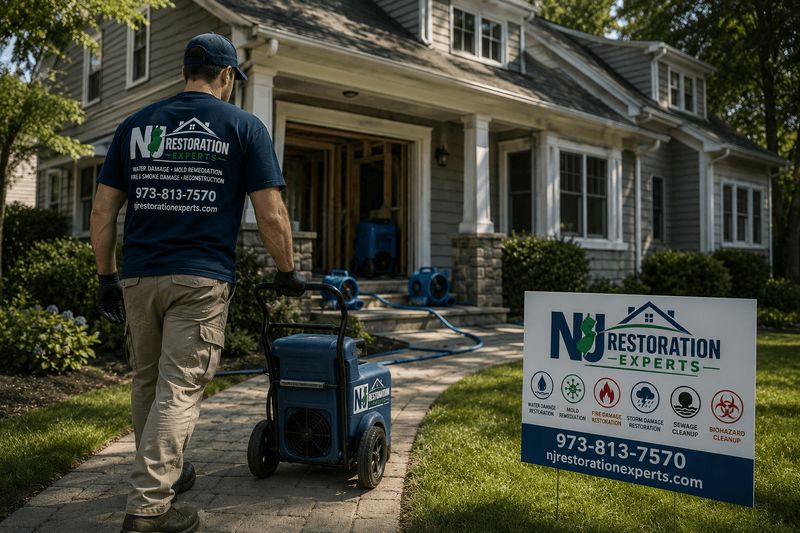
NJ Restoration Experts carries losses through the whole arc across Northern New Jersey. Our crews handle reconstruction after water, fire, mold, and storm damage — framing and structural repairs, insulation, drywall and plaster, flooring of every kind, interior and exterior trim, cabinetry, paint, and the hundred finish details that make 'restored to pre-loss condition' a fact instead of a phrase. It's the same commitment printed on our crew shirts and yard signs: restoration through reconstruction.
The one-team model isn't a slogan; it's a practical advantage you feel at every handoff that doesn't happen. The rebuild crew works from the mitigation crew's moisture logs and demolition scope, the insurance documentation flows as one continuous file instead of two vendors' paperwork, and there's exactly one phone number responsible for the schedule from the first extraction to the final coat of paint. When something needs answering — and on a rebuild, something always does — accountability has an address.
What Our Reconstruction Services Service Includes
- Structural & Framing Repairs
- Insulation & Drywall Installation
- Plaster Repair for Older NJ Homes
- Flooring: Hardwood, Tile, Carpet & LVP
- Interior Trim, Doors & Finish Carpentry
- Cabinetry & Countertop Replacement
- Painting & Ceiling Texture Matching
- Insurance Scope-Aligned Rebuilding
From Mitigation to Move-Back-In: What Reconstruction Covers
Water losses leave a predictable rebuild trail: flood cuts through drywall at two or four feet, missing insulation, removed flooring and underlayment, opened ceilings below leak paths, and demolished cabinet runs where water got beneath. Reconstruction reverses that trail in order — insulation, drywall, finishing, floors, trim, cabinets, paint — with the moisture logs from drying as the green light that makes closing the walls safe. Because we ran that drying, the logs and the rebuild schedule live in the same file.
Fire jobs rebuild deeper: charred framing sistered or replaced, smoke-affected materials that were removed during cleaning now reconstructed, electrical and systems coordination where heat reached them, and whole rooms taken to studs coming back as finished spaces. Storm losses add the exterior — roof decking, siding, windows, and the interior damage beneath them. Mold remediation adds its own small rebuilds: the opened wall behind a shower, the removed basement drywall, the attic sheathing repairs. Different losses, same discipline: build back to pre-loss condition or better, documented against the insurance scope line by line.
Older Northern New Jersey homes deserve their own mention, because rebuilding them is a craft problem as much as a construction one: plaster walls that shouldn't become drywall patches with visible seams, trim profiles that stopped being milled decades ago, hardwood species and board widths that need matching rather than approximating. Restoration means the repair disappears — and in a 1920s colonial, that takes crews who've done it before.
Choosing Who Rebuilds: Questions Worth Asking
Whether we ran your mitigation or someone else did, the rebuild decision deserves clear eyes. Ask any contractor — including us — these:
- Will you work from the insurance scope and flag discrepancies — or bill outside it and leave me exposed?
- Who verifies the structure was dry before you close walls? Show me the readings you'll rely on
- One project manager start to finish, or a rotating cast? Rebuilds die by handoff
- Can you match my plaster, trim, and floors — or does 'restored' mean 'patched and painted'?
- What's the realistic schedule, and what typically moves it? Honest answers beat happy ones
- Are you licensed and insured for reconstruction in NJ, and can I see it? (Ours: yes, and yes)
One structural note: if your mitigation was done by another company, we start by reviewing their drying documentation before any rebuild scope — closing walls over someone else's unverified dry-out inherits their problem as ours, and neither of us wants that.
Our Reconstruction Services Process
Scope & Align
The rebuild scope is written against the loss documentation and your insurance estimate line by line — discrepancies get flagged and resolved before work, not discovered at invoice.
Verify the Foundation
Drying logs and moisture readings confirm the structure is ready; anything still wet or suspect gets resolved first, because everything after depends on it.
Rebuild the Bones
Framing repairs, insulation, and systems coordination bring the structure back to sound — inspected and documented before it disappears behind drywall.
Close & Surface
Drywall and plaster go up, seams and textures matched to the original — the phase where a repair starts becoming a room again.
Floors, Trim & Finish
Flooring installed or woven into existing, trim matched and set, cabinetry placed, and paint brought to final — pre-loss condition, verified against the photos from day one.
Walk Through & Close Out
You walk the finished work against the scope with us, punch items get resolved, and the file closes with the documentation your carrier and your records want.
Insurance Claims for Reconstruction & the Insurance Scope
Reconstruction is where insurance claims are won or lost in the details, because the rebuild is priced against a scope — the carrier's line-item estimate of what restoration requires. Contractors who work outside that framework leave homeowners bridging gaps out of pocket; contractors who work blindly inside it miss legitimately owed items the estimate overlooked. The craft is alignment: building to the scope, documenting what the scope missed, and submitting supplements with evidence when the opened wall reveals what the estimate couldn't see.
That's how we run rebuilds: your insurance estimate is a working document on our side of the table, supplements are prepared with photos and specificity when justified, and billing reconciles against the claim rather than surprising it. Depreciation holdbacks, recoverable versus non-recoverable items, mortgage-company endorsements on claim checks — the administrative machinery of insurance rebuilds is machinery we operate weekly, and shepherding you through it is part of the service.
Why NJ Homeowners Call Us First
One Team, No Handoffs
The crew that dried your loss rebuilds it — one file, one schedule, one accountable phone number from extraction to final paint.
Insurance-Rebuild Fluency
Scopes, supplements, depreciation, and mortgage endorsements handled as routine — because here, they are.
Old-House Craft
Plaster, legacy trim profiles, and hardwood matching for NJ's older housing stock — repairs that disappear instead of announcing themselves.
Dry Verified Before Closed
Walls close over documented readings, never assumptions — the rebuild inherits proof, not risk.
Licensed & Insured in NJ
Full reconstruction licensing and insurance, shown on request — table stakes that surprising numbers of rebuild outfits can't show.
Pre-Loss or Better, Literally
The standard is the day before the loss — and where materials or methods have improved since your home was built, you benefit from the upgrade.
Helpful Resources
Reconstruction follows verified drying — see structural drying & dehumidification for why that order is non-negotiable. The losses that lead here: water damage, fire damage, and mold remediation. For the claims machinery, our insurance claims help page walks the process, and choosing a restoration company covers the questions worth asking anyone.
Reconstruction Services — Frequently Asked Questions
Can you rebuild if a different company did the mitigation?
Yes — it starts with reviewing their drying documentation, and where logs are missing or doubtful, our own moisture verification before walls close. We take rebuild-only projects regularly; the non-negotiable is proof of dry, whoever produced it.
How long does reconstruction take?
Scale answers it: a flood-cut room runs days to a couple of weeks; a multi-room water loss runs weeks; a serious fire rebuild runs months. The honest drivers are scope, material lead times, and insurance approvals — and you'll get a schedule built on those, updated when they move, rather than an optimistic number that quietly slides.
Will the repaired areas match the rest of my house?
That's the standard we hold: texture and paint blended past the repair line, trim profiles matched or milled, flooring woven or transitioned intentionally, plaster repaired as plaster. 'You can't tell' is the goal, and in older homes it's a craft point of pride.
Do I have to use my insurance company's preferred contractor?
No — in New Jersey the choice of contractor is yours. Carrier vendor programs are optional convenience, not obligation, and carriers must work with the licensed contractor you choose. Choose whoever earns it; we're comfortable being compared.
What if you open a wall and find more damage?
It gets documented, photographed, and submitted as a supplement to your claim with the evidence attached — the normal, legitimate mechanism for what estimates couldn't see. What it never becomes is a verbal surprise on your invoice. Hidden-condition discoveries are why insurance rebuilds have supplements; using them properly is part of the job.
Can we upgrade finishes while you're rebuilding?
Absolutely — rebuilds are efficient moments for the flooring you actually wanted or the bathroom worth improving. Insurance pays to restore pre-loss condition; upgrades price separately and transparently, and you'll see exactly where the claim ends and your choices begin.