Crawl space water is the loss with no witness. A burst pipe in the kitchen gets discovered in minutes; the same pipe running under the floor can pour water into the crawl space for days before a symptom reaches anyone — a smell, a humid house, a floor that feels different. Storm flooding under the house is discovered the same way most crawl space problems are: late, by accident, or by the home inspector working for your buyer.
NJ Restoration Experts handles crawl space water damage across Northern New Jersey — emergency pumping of standing water, extraction from the ground and any liner, structural drying of joists, beams, and subfloor from below, sanitizing where the water was contaminated, and the moisture-control work that determines whether this is a one-time cleanup or an annual tradition.
The crawl space's construction is what makes water there so consequential: your home's floor structure sits directly in the humid air above the water, absorbing moisture hour after hour. Standing water that would be a shop-vac inconvenience on a garage slab is, under the house, a slow-motion attack on the framing — and the mold and decay it feeds work in the dark, undisturbed, on the structure everything else rests on.
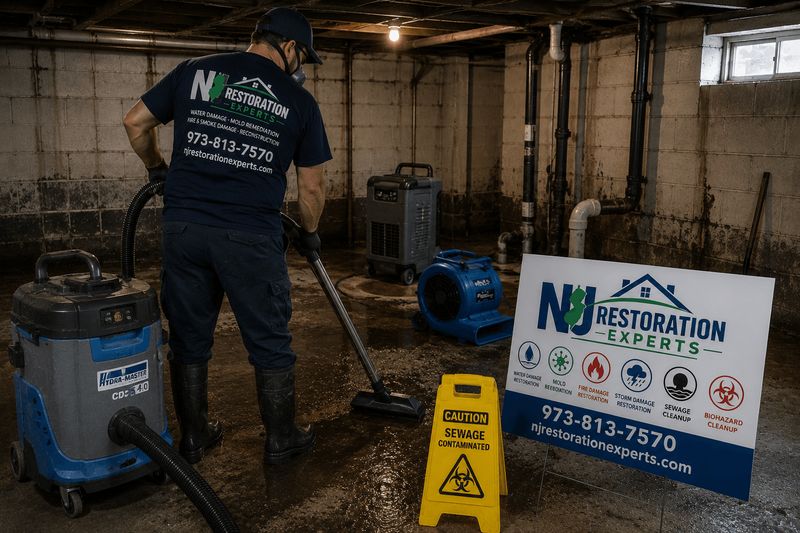
What Our Crawl Space Water Damage Cleanup Service Includes
- Emergency Crawl Space Pumping
- Standing Water & Mud Extraction
- Joist, Beam & Subfloor Drying
- Sanitizing for Contaminated Water
- Soaked Insulation Removal
- Vapor Barrier Replacement or Installation
- Moisture Source Identification
- Structure Condition Documentation
How Water Gets Under the House — and Why It Stays
Plumbing is suspect number one, because so much of it runs through the crawl space: supply lines that burst or slow-leak at fittings, drain lines that separate at joints and discharge greywater or sewage into the soil, and water heaters or washer connections above that drain downward through the floor. These losses run hidden by default — the crawl space is where pipes go to leak privately — and the discovery lag is what turns a plumbing repair into a structural drying project.
Ground and storm water supply the rest. Northern New Jersey's clay soils and seasonal water tables push water through foundation vents, up through the soil floor, and along the same grading and gutter failures that flood basements; low crawl spaces in flood-prone towns can take on inches during any serious storm event. Unlike a basement, nobody's downstairs to notice — the water arrives, soaks in, and begins its long evaporation into the floor structure above.
And that's the part that separates crawl spaces from every other flood: the water doesn't leave when the storm does. Trapped between soil and subfloor with minimal airflow, standing water and saturated ground evaporate upward for weeks, holding humidity at wood-rotting, mold-growing levels the entire time. A crawl space that flooded a month ago and 'drained on its own' is very often still wet where it counts — which is why pumping is the start of this job, never the end of it.
Water Under the House? First Moves
You may not be able to see the full picture from the hatch — but these steps protect the structure and the diagnosis.
- If plumbing could be the source, shut the house main now — the leak may still be running
- Look and listen from the access without crawling: standing water depth, dripping sounds, smell
- Don't crawl into standing water — wiring, contamination, and pests make it a crew job with equipment
- Kill power to any crawl space circuits (sump, lights) if the panel is safely reachable
- Note the timing: after a storm, after a water bill spike, after appliance use — it points to the source
- Call 973-813-7570 — describe depth and smell, and we'll dispatch with the right pumping setup
A sewage smell changes everything: drain-line failures under the house mean contaminated soil, and the cleanup involves removal and sanitizing that clean-water losses don't. Mention it on the call so the crew arrives equipped for it.
Our Crawl Space Water Damage Cleanup Process
Assess From Above & Below
Source, water depth, contamination category, and structure condition get established before the plan — with photos, since this is the space you won't be inspecting yourself.
Pump & Extract
Submersible pumps clear standing water; extraction follows for the saturated liner, low spots, and mud that hold the rest.
Clear the Casualties
Soaked insulation, waterlogged debris, and contaminated vapor barrier come out — wet material left under the house is a humidity battery.
Dry the Structure
Air movers and dehumidification sized for the space dry joists, beams, and subfloor to verified readings — the framing gets metered, not eyeballed.
Sanitize Where Needed
Sewage and greywater events get soil treatment and antimicrobial application; clean-water losses get treated where dampness dwelled.
Barrier & Prevent
New vapor barrier down, moisture source addressed or documented for the right trade, and a condition report on the wood — including anything that needs a structural eye.
Insurance Claims for Crawl Space Water Damage
Coverage under the house follows the same rules as above it: sudden plumbing failures — the burst supply line, the separated drain — are typically covered including the crawl space cleanup and drying, while ground water, rising storm water, and chronic seepage fall to flood insurance or outside coverage entirely. The complication crawl spaces add is discovery lag, since carriers distinguish sudden losses from long-term ones, and a leak that ran hidden for weeks needs its story told correctly.
That story is exactly what we document: the failure point, the evidence that the loss was concealed from reasonable view, moisture mapping that separates the event's damage from any pre-existing dampness, and the drying log through completion. Hidden-loss claims are won on that documentation — and where the honest answer is ground water with no coverage, we say so and price the work transparently.
Why NJ Homeowners Call Us First
Crews That Fit the Space
Low clearances, hatch-only access, and wet crawls are normal working conditions here — the job gets done regardless of how unpleasant the commute under your house is.
Pumping Is the Start, Not the Job
Standing water out is hour one; the drying, removal, and barrier work that follow are what actually protect the structure.
Contamination Taken Seriously
Drain-line failures mean sewage in soil — treated with removal and sanitizing protocols, not a pump-and-pretend.
Framing Metered Like It Matters
Joists and subfloor get verified dry with readings — this is the structure your floors stand on.
Photo-Documented Throughout
You see the before, during, and after of a space you'll never crawl — and so can your adjuster or your buyer.
The Comeback Gets Addressed
Vapor barrier, source correction, and honest guidance on drainage or sump needs — cleanup that ends the cycle, not subscribes to it.
Helpful Resources
If dampness has already grown something, our crawl space mold removal page covers the remediation side, and the crawl space mold post explains the moisture story. Sudden pipe failure? See burst pipe cleanup. Storm-driven water follows the spring thaw and hurricane season patterns. The drying phase itself is detailed at structural drying & dehumidification.
Crawl Space Water Damage Cleanup — Frequently Asked Questions
There's standing water in my crawl space after the storm. Will it just drain away?
Some will percolate; what matters is what it leaves behind — saturated soil and a sealed, airless space evaporating moisture into your floor framing for weeks. 'It drained on its own' is how crawl spaces end up with mold and soft joists a season later. Pumping plus drying plus a proper barrier is the version where it's actually over.
How do I know if the water is from plumbing or the ground?
Timing and evidence: water appearing after storms points to ground and drainage; water with a spiking bill, a running-meter test, or appliance timing points to plumbing; sewage smell points to a drain line. Our assessment settles it with the source identified and photographed — which also happens to be the fact your insurance coverage turns on.
Is crawl space water really damaging my house?
Directly and from below: sustained humidity raises the moisture content of joists and subfloor into mold and decay territory, rusts ductwork and fasteners, and drives the musty air the stack effect delivers upstairs. The damage is slow, invisible, and structural — the worst combination — which is why water under the house warrants the same urgency as water in it.
My insulation is soaked and falling down under there. Now what?
It comes out as part of the cleanup — saturated batts can't be dried in place, and hanging wet insulation holds moisture against the subfloor while insulating nothing. Once the structure is verified dry, re-insulating (properly, with the moisture situation controlled) makes sense; wet-batts-back-up does not.
Do you install sump pumps or French drains in crawl spaces?
Our scope is the water damage: pumping, drying, sanitizing, barriers, and honest diagnosis of the source. Where the fix is drainage infrastructure — crawl sump systems, exterior grading, French drains — we document exactly what the space needs and coordinate with the right specialty contractor rather than dabbling outside our lane.
Can you fix it so this never happens again?
We can end the cleanup cycle for the causes we control — barriers, corrected plumbing exposure, humidity management — and precisely diagnose the ones needing drainage or grading work. What your specific crawl needs depends on its water source, and the condition report you receive names it plainly, with next steps rather than upsells.